Is Dry Eye Syndrome Treatable? Causes, Remedies, and In-Office Solutions
Updated: Sep 25
If your eyes feel gritty by mid-afternoon, sting after a few hours at the computer, or water excessively in a way that seems backwards for something called "dry" eye, you're not imagining it, and you're definitely not alone.
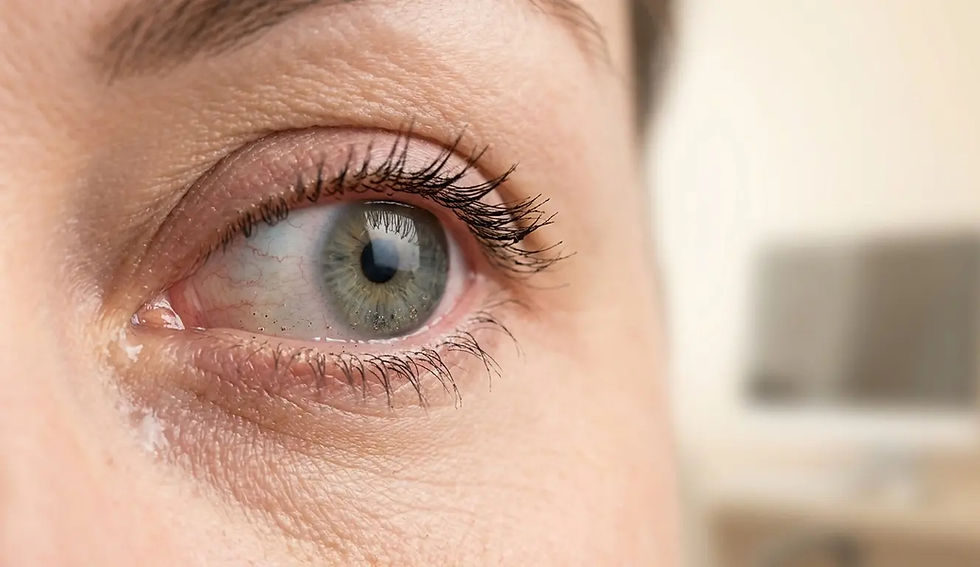
Dry eye syndrome is one of the most common reasons patients visit Two Trees Optometry, and the honest answer to whether it's treatable is yes, though it usually means managing a chronic condition well rather than curing it permanently in a single visit.
What Dry Eye Syndrome Actually Is
Dry eye syndrome happens when your eyes don't produce enough tears, or when the tears you do produce aren't good enough quality to keep the surface of your eye properly coated. Tears aren't just water. A healthy tear film has three layers: an oily outer layer that slows evaporation, a watery middle layer that hydrates and washes away debris, and a mucus inner layer that helps tears spread evenly across the eye. A problem in any one of those layers can lead to dry eye symptoms.
There are two main types. Evaporative dry eye, which makes up the large majority of cases, happens when the meibomian glands along your eyelids, tiny oil glands that line the edge of each lid, become blocked or don't produce enough oil. Without that oil layer, tears evaporate far faster than they should. Aqueous deficient dry eye is less common and happens when the glands that produce the watery part of your tears simply don't make enough, leaving the tear film unstable even without an evaporation problem. Some patients have a mix of both.
A wide range of factors can contribute to dry eye, and most patients have more than one at play.
● Age, since tear production naturally slows over time and meibomian gland function tends to decline as well
● Screen time, since we blink significantly less often while staring at a screen, giving tears more time to evaporate
● Dry or windy climates, air conditioning, and heating systems, which all pull moisture from the eye's surface
● Certain medications, including antihistamines, some antidepressants, and blood pressure medications
● Contact lens wear, hormonal changes, autoimmune conditions, and incomplete eye makeup removal before bed
Symptoms Worth Bringing Up at Your Next Exam
Dry eye symptoms can show up in more varied ways than people expect, which is part of why it sometimes goes undiagnosed for a while. Common signs include a burning or stinging sensation, a gritty feeling like something is in your eye, redness, sensitivity to light, blurry vision that improves with blinking, and eyes that feel tired or heavy by the end of the day. Ironically, excessive watering can also be a symptom, since an unstable tear film can trigger your eyes to overproduce watery tears as a reflex response, without actually solving the underlying oil or quality problem.
Is Dry Eye the Same as Allergies?
It's a fair question, since the symptoms overlap. Allergy-related eye irritation tends to be dominated by itching, often alongside redness, watering, or swollen eyelids, and it typically flares during specific seasons or after exposure to pollen, dust, or pet dander. Dry eye symptoms are usually more about burning, grittiness, and fluctuating vision, with itching present but milder. If you're not sure which one you're dealing with, that's exactly the kind of thing worth bringing to your eye doctor rather than guessing with over-the-counter drops, since some allergy treatments, including certain oral antihistamines, can actually make dry eye worse.
At-Home Remedies That Genuinely Help
For mild dry eye, a few consistent habits can make a real difference.
● Preservative-free artificial tears used regularly, not only when symptoms flare, to help maintain a stable tear film
● Warm compresses on closed eyelids for several minutes to loosen blocked oil in the meibomian glands, followed by a gentle lid massage
● Regular screen breaks, following a simple rule like looking at something twenty feet away for twenty seconds every twenty minutes
● A humidifier in dry indoor air
● Thoroughly removing eye makeup before bed to protect the oil glands along the lash line
These habits are genuinely useful, but they tend to plateau at a certain point for patients with moderate to more persistent dry eye, which is where in-office treatment becomes worth discussing.
In-Office Treatment Options
When at-home care isn't enough, several in-office treatments can address the underlying cause rather than just the symptoms.
Prescription anti-inflammatory drops, including cyclosporine and lifitegrast, work by reducing the surface inflammation that keeps the dry eye cycle going, rather than simply lubricating the eye temporarily. For patients whose main issue is blocked meibomian glands, in-office treatments that apply gentle, sustained heat to the eyelids can soften blocked oil and allow it to be expressed, restoring healthier oil flow to the tear film. This kind of treatment typically takes well under an hour and is a comfortable, in-office procedure rather than a surgical one.
Punctal plugs, tiny devices inserted into the tear ducts, can help patients with aqueous deficient dry eye by keeping the tears you do produce on the eye's surface longer instead of draining away too quickly. In select cases, light-based therapies can help reduce inflammation and support gland function as part of a broader treatment plan.
The right combination depends entirely on what's actually driving your symptoms, which is why an accurate diagnosis matters more than reaching for whatever drop is on sale at the pharmacy.
What Happens If Dry Eye Goes Untreated
Mild dry eye that comes and goes usually isn't dangerous, but chronic, untreated dry eye can gradually cause more lasting problems. Persistent dryness can lead to small abrasions on the surface of the eye, called corneal epithelial defects, which raise the risk of eye infections and can be genuinely painful. Long-term inflammation can also affect the stability of your vision, making everyday tasks like reading, driving at night, or working on a screen more tiring than they should be. None of this tends to happen overnight, but it's part of why persistent symptoms are worth addressing rather than working around indefinitely.
Common Questions About Dry Eye Syndrome
Are eye drops from the drugstore enough to treat dry eye?
For mild, occasional dryness, preservative-free artificial tears are often enough. For symptoms that show up daily or don't improve with regular use, an eye doctor can identify the underlying cause, whether it's evaporative, aqueous deficient, or a mix of both, and recommend treatment that addresses it rather than just masking symptoms temporarily.
Can dry eye syndrome cause permanent vision loss?
It's uncommon, but severe, long-term untreated dry eye can damage the surface of the cornea and affect vision quality. This is one more reason to have persistent symptoms evaluated rather than managed indefinitely with over-the-counter drops alone.
How long does in-office dry eye treatment take to work?
Many patients notice improvement within a few weeks of starting treatment, though full results from gland-focused treatments or prescription anti-inflammatory drops can take a few months, since they're addressing an underlying process rather than providing instant relief.
Does dry eye get worse with age?
It often does, since both tear production and meibomian gland function tend to decline over time, and hormonal changes around menopause can make symptoms more noticeable for many women. This doesn't mean dry eye becomes untreatable with age. It usually just means the treatment plan may need to be adjusted or layered over time rather than staying static.
Can screen time alone cause dry eye?
Screen time doesn't create dry eye on its own, but it's one of the most common triggers for symptoms, since we blink far less often while focused on a screen. Reduced blinking gives tears less opportunity to refresh the eye's surface, which is why symptoms often feel worse by the end of a workday spent at a computer.
So, Is Dry Eye Syndrome Treatable?
Yes, in the sense that matters most to patients: real, lasting relief is achievable for the great majority of people. A permanent, one-time cure isn't realistic for most chronic dry eye, since it's often tied to ongoing factors like age, gland function, or screen habits that don't simply go away. But with the right combination of at-home care and, when needed, in-office treatment matched to your specific cause, most patients get to a place where their eyes feel comfortable again day to day, rather than something they're constantly managing around.
Ready to Get Your Dry Eye Symptoms Under Control?
If burning, grittiness, or blurry vision by the end of the day sound familiar, it's worth having your eyes evaluated rather than continuing to guess with drops from the drugstore. Our team at Two Trees Optometry in Ventura can identify what's actually driving your dry eye and build a treatment plan around it. Schedule an eye exam with Dr. Crews or Dr. Ruiz today.
Schedule an appointment to get started, explore our full eye care services for a look at what a dry eye evaluation includes, or contact our office with any questions. If you wear contacts and dry eye has made them uncomfortable, it's also worth asking about your options when you order contacts through us next time.


Comments